Patients suffering from the following conditions may be at risk:
- Overweight
- Habitual snoring
- High blood pressure
- Family history of OSA or snoring
- Small upper airway

OSA is a breathing disorder characterized by brief interruptions of breathing during sleep that affects men and women of all ages.
One in four Canadians is at high risk for having obstructive sleep apnea. Most of those at risk are not screened for OSA and go undiagnosed.
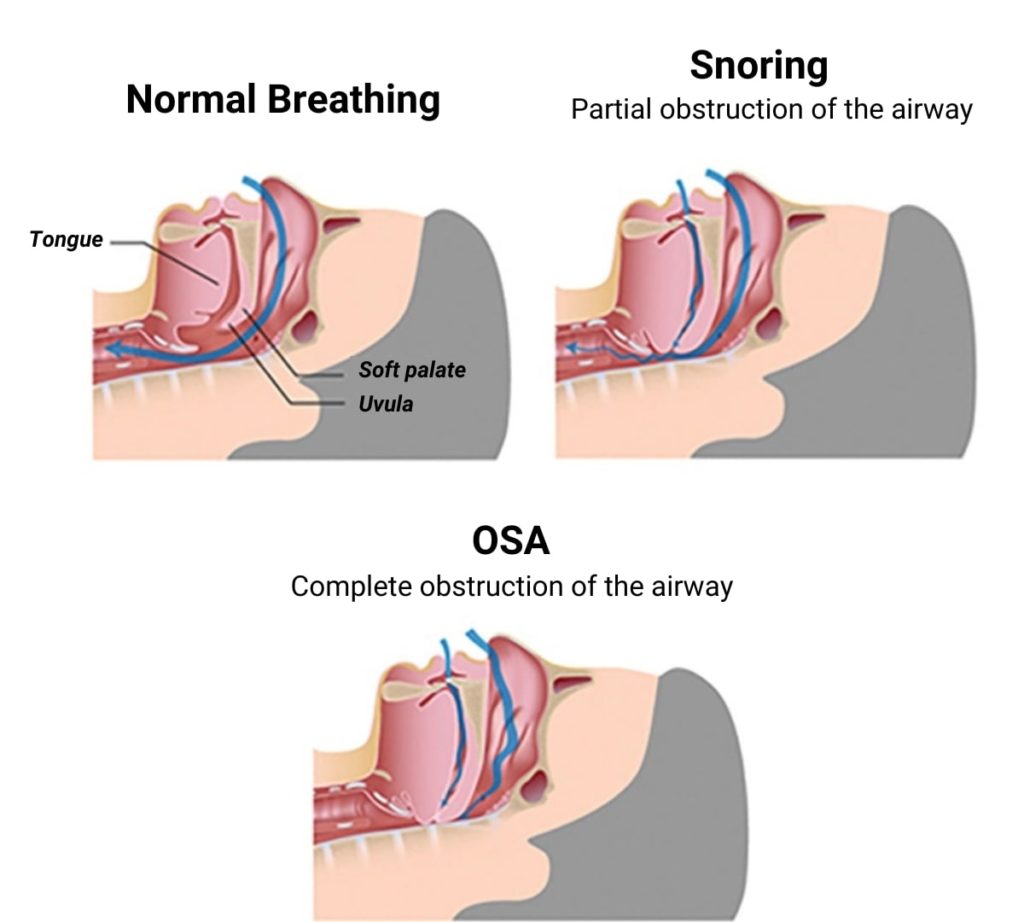
When you go to sleep, your muscles relax including those in your throat. In some people, the floppy muscles cause the airways to narrow, which can reduce the amount of air flowing in and out. If your throat closes completely, you stop breathing for a time. This is called an apnea if it last for 10 seconds or more. If the airway in your throat narrows for 10 seconds or more and the oxygen level in your blood dips, you will experience a hypopnea. Hypopneas can be accompanied by snoring. Snoring is simply the sound of the tissues in the throat vibrating.
After an apnea or hypopnea, your brain will start your breathing again and often this is done unconsciously. Some people wake up briefly but others are not aware of what is happening. Breathing often restarts with gasp and some movement. If you have severe OSA, this cycle can happen hundreds of times per night. These frequent arousals disrupt your sleep and so you can feel very sleepy during the day.
Most people with OSA don’t know they are snoring or waking up at night and gasping for air. Also, they have become accustomed to daytime sleepiness. For these reasons, they do not speak with their family physicians about the symptoms. Very often it is the bed partner who reports these signs and prompts the sufferer to seek help. OSA can be a serious problem that is easy to detect and treat.
You needn’t visit the clinic to be tested for sleep apnea
All instruction is provided by online video conferencing
Take advantage of reduced pricing on all our products!
Consult our professionals through TELEMEDICINE
More affordable without compromising on service